-Robin R. Means Coleman’s, “Studying Blacks and Horror Films,” is an elaborate article that explains to readers about Black Horror films and Blacks in Horror. The article also goes on to explain the Horror Noire and the Century of Black Horror. Coleman gives a great understanding of how black viewers have seen themselves as racist caricatures whose murders are cheered on by white audiences. Additionally, she goes on to explain how to spot the differences between black horror films and blacks in horror.-
Look into the mirror. Take a moment, breath, and say the name Candyman five times. See what happens. This is what it takes to summon the entity known as Candyman, a vicious killer with a hook for a hand. He appears from the mirror covered in blood with an intent to kill whoever has summoned him. Bernard Rose’s 1992 Candyman tells the chilling story of a grad student named Helen Lyle and her friend Bernadette, who investigate urban legends as a part of Helen’s thesis project. By doing this, the two women uncover the lore of the “Candyman”, a slave murdered during the 18th-century who wields a hook for a hand. Helen makes the mistake of invoking him and not believing in the Candyman.
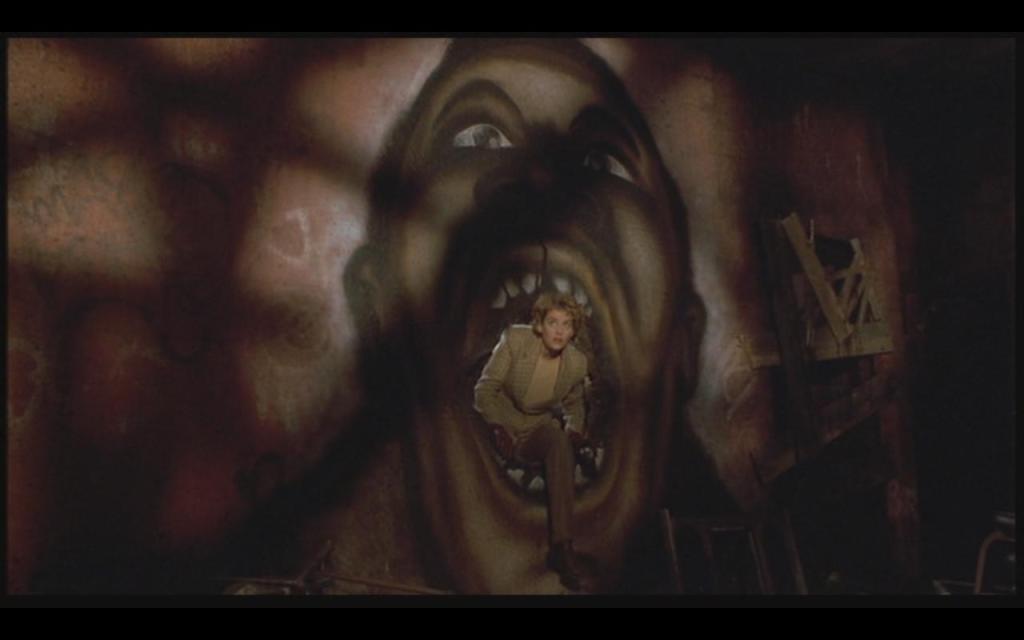
Considered an original and scary horror movie of the early 1990s, Bernard Rose’s 1992 Candyman adaptation of author Clive Barker’s “The Forbidden,” stands well as an effectively terrifying film about an urban legend in Chicago. Candyman is an excellent film to watch and analyze using Robin R. Means Coleman’s, “Studying Blacks and Horror Films,” because it shows viewers what the difference between Blacks in Horror and Black Horror films are, as well as demonstrating how blacks are considered the racial other in horror. Candyman has an extraordinary multidimensional plot that develops on a sociological, psychological, and parapsychological level. Coleman states, “Blacks have a rather unique relationship with American film’s presentation of Blacks.” This is a true statement because Blacks are either used as the monster/racial other, or as people that are to be killed off first in horror films.
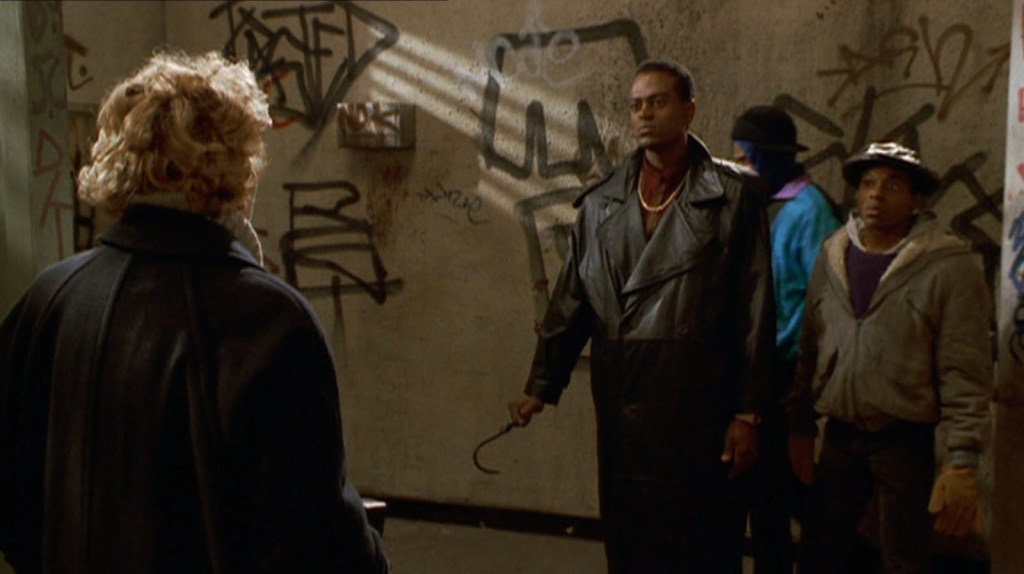
To start off, the movie explores the belief of an urban legend. An urban legend that manifests because people tell his story. As Candyman stated, he is the whisper in the classroom that will forever exist. When Helen sets out to debunk the Candyman, this can be seen as an attempt on Candyman’s life. “Your disbelief destroyed the faith of my congregation. Without them, I am nothing.” Not believing in the Candyman will destroy his immortality. The only way the Candyman can exist is through the shedding of innocent blood so that the stories of him can continue to proliferate. When Helen decides that the Candyman is actually a local drug dealer hiding behind the Candyman identity, she feels that she has solved the mystery of the mysterious murders that the Candyman has committed (Figure 2). Helen does not know that the Candyman is a a physical manifestation of the jungian collective unconscious. Candyman comes and takes his revenge. He feels obliged to come because of how Helen has caused much doubt about his actual existence.
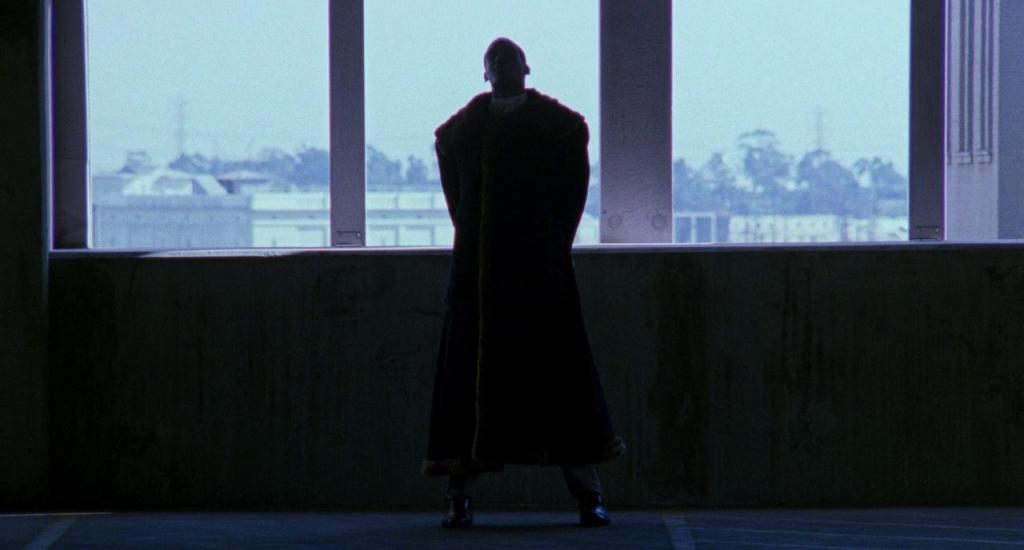
Coleman states, “Blaxploitation, this moniker is as much about exposing a category of film imbued with stereotypes of race relations, gender roles, sex, and violence as it is a critique of those who created the stereotypes,” this is an important quote from the article because it explains why people are being tormented by the Candyman. Due to the evil monstrous racist of the past, they effectively created Candyman after they murdered him. This movie serves as a critique of how monstrous racism can create something far more horrific in the long run (Figure 3 & 4).
Additionally, a great thing that Candyman does is show the major contrast of racial issues. Coleman states in her article, “horror films can reveal through representations, about our understandings of Blacks and Black cultural tropes, or Blackness, as well as what kind of sociopolitical discourses these films contribute, and what meanings they might provoke. More, I speculate about the impetus for some of horror’s racialized imagery and narratives. Marking Black people and culture as Other- apart from the dominant White populations and cultures in the US.” This quote can be can be seen and understood by noting the differences of the main character and where the Candyman resides. The setting is showing two different worlds. Helen and Bernadette are graduate students doing research. They are two women who live in the projects who work at the college, but it is much cleaner. The condo that Helen lives in is similar to Cabrini Green, where Candyman haunts, but it’s much nicer. The complete duality is blatant to any viewer of this film. By going even farther, viewers can take note that the police show up much faster when something happens to Helen, compared to those living in Cabrini Green.
Altogether, Bernard Rose’s 1992 Candyman is a supernatural slasher film, that shows Blacks in Horror Films, as well explains how they are demonstrated as the racial other. Even though Candyman is considered a horror film with Blacks in it, it can also be seen as a Black Horror film because of the aspects it deals with regarding racial issues between black minorities and white majorities.
 Film and Culture 20/SP*CMS*353*A (Conor Diggs)