Gruesome, terrifying, chilling. These are a just a few adjectives that describe the eerily realistic filming of the killer Leatherface at his Texan home. The Texas Chainsaw Massacre tells a story of how 5 teenagers driving through rural Texas happen upon an cannibalistic family that utilizes psychological terror and a chainsaw on their victims. Though the villains portrayed in this film are terrifying in their own aspect, what makes The Texas Chainsaw Massacre so petrifying is the atmosphere that was created. The strongest type of fear which was highlighted by H.P Lovecraft as well as Stephen King at times is the quote, “The oldest and strongest kind of fear: the fear of the unknown.” The Texas Chainsaw Massacre does an excellent job explaining nothing on why the cannibals are they way they are and not giving a motive to the viewers. This technique which is utilized is scary because it makes viewers of the movie think twice about going through the country as well as asking a stranger for assistance. Since the film doesn’t explain any of the terrible actions that happened, it’s best for movie critics to analyze and get an idea of what exactly is happening in Tobe Hooper’s 1974 The Texas Chainsaw Massacre by using Tony Williams, “Chainsaw Massacres: The Post Apocalyptic Dimension.”
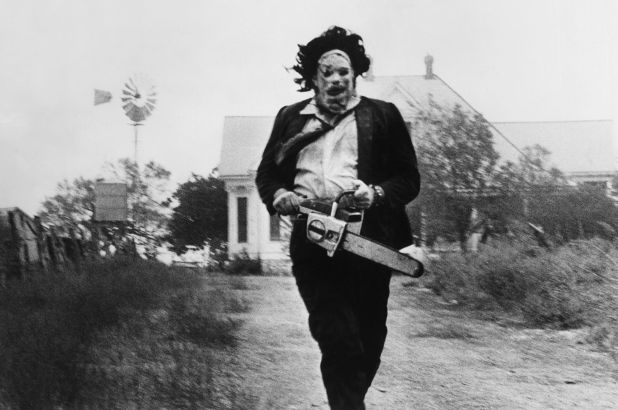
To start off, The Texas Chainsaw Massacre can be seen as a realistic event of what happens to people if they are pushed off into the far unknown of society and left to fend for themselves. If these people are pushed far enough, they resort to savage and barbaric ways of life with a twist of mania due to this overwhelming form of castration anxiety. William states, “The Texas Chainsaw Massacre represents Puritanism’s worst fears. Its slaughterhouse family are the twentieth-century descendants of Ishmael Bush of The Prairie. They represent demonic Indians of Puritans nightmares by their cannibalistic activities. At the same time the family are losers within the American Dream made redundant by new technology and changing historical forces. Unlike the Indians, they neither vanished into reservations nor travel west like the Okies. Instead, they live on the margins of civilization, brutally following the logical consequences of consumer capitalism. They represent repressed violent family tendencies.”
To fully understand the dynamic and magnitude of this quote above, one must be familiar with The Prairie. The Prairie takes place during the years around the Lewis and Clark Expedition, roughly between 1804-1806. The Prairie follows a near similar story of what happens in The Texas Chainsaw Massacre, however, the main villains, Ishmael and the Indians fade off into obscurity, while the cannibalistic Sawyer family is simply pushed to the fringes of their society (Figure 2). The Sawyer family is the representation of hysteria and mania as well as what happen when new technology and change doesn’t fully push a group of individuals into obscurity, but into a corner instead. The Native Americans could not advance as fast as technology did in the United States and were forced to go off on reservations where they could continue their ways in “peace.” This was the same for the Sawyer family once consumer capitalism began to kick in, yet the only place the Sawyer family could continue to live out there ways was in their country home in the middle of nowhere Texas.

Additionally, William’s bring up similarities showed between the Sawyer family and Sally and Franklin. William states, “Family circumstances necessite the presence of her obese brother Franklin. The others regard him as a nuisance. Sally has to look after him as Hitchhiker has to care for Leatherface. Both siblings resent this family duty. Arriving at the family graveyard, Sally accompanies the sheriff to check on the grave. No other young people are present. The majority are either old or middle-aged. Several intercut shots show a drunk. Shot from a high angle, his head grotesquely in the frame’s foreground, he acts as a chorus telling the ‘unofficial’ version of events.” This is important to know because much like a majority of other horror films, when characters deny the irrational they are bound to end up dying. On a bigger scale, what this drunk man was saying towards the beginning of the film reveals that American society tends to accept irrational explanations over unpalatable rational causes. It is a common pattern, a denial of social causation.
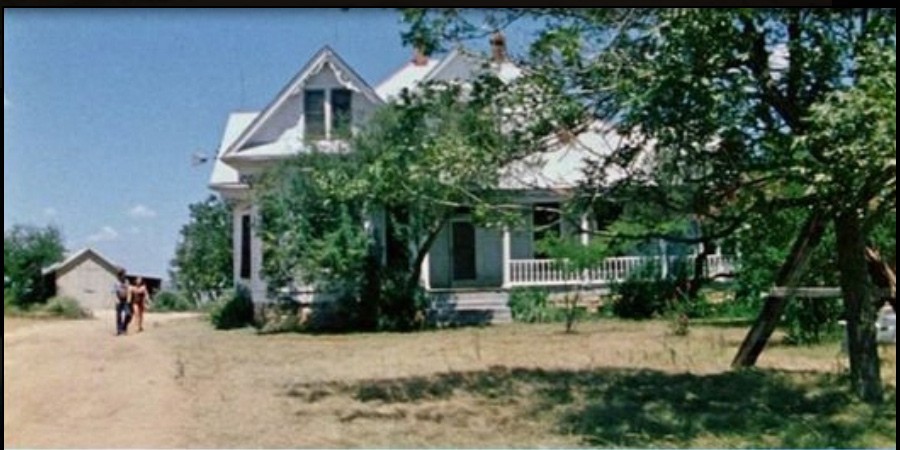
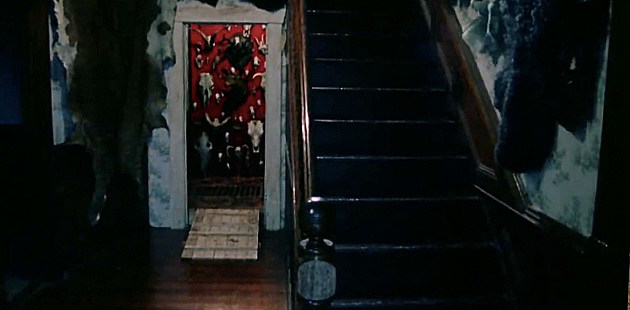
Furthermore, a strong image that The Texas Chainsaw Massacre shows is how families on the outside to others can seem good and wholesome, but on the inside the families could be chaotic and sinister. For instance, looking at the Sawyer house, on the outside it is a relatively nice looking home, but once inside the viewers were able to see that the house was a mess and riddled with bones and animals (Figure 3 & 4).
Lastly, William states that, “The Texas Chainsaw Massacre is one of the most nihilistic visions of the family, revealing a heart of darkness that generates violence and destruction. Despite apocalyptic elements Hooper presents his slaughterhouse family as material embodiment of capitalist repression.” This quote is strong by William because the United States is a strong capitalistic economy which thrives and survives off of this system. With the current pandemic going on, the economy is coming to a painstakingly slow halt. People are becoming angry with the flaws of how a country dominated by capitalism treats its individuals. Sure , cities throughout the United States may be similar to the movie The Purge if things continue to go downhill, but it’s safe to assume that in the far out rural country, if people are starting to lose their businesses it would make sense that they will be forgotten much like the Sawyer family. Hopefully, if forgotten, these families don’t take a terrifying evil turn as the Sawyer family did.
 Film and Culture 20/SP*CMS*353*A (Conor Diggs)