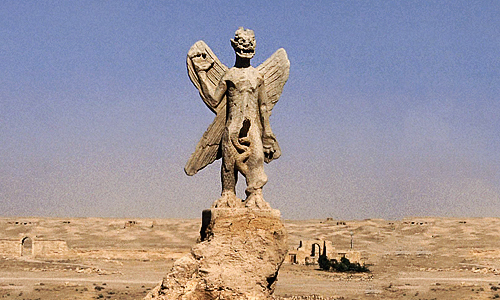
“What an excellent day for an exorcism.” Declares the Devil. A cold chilling statement from Beelzebub himself. William Freidkin’s 1973 The Exorcist explores and shows the idea for people around the world an intrinsic feeling that there exists an outside realm of an established dogma that defy conventional science and logic. The Exorcist focuses on demonic possession that grounds itself through a thoroughly believable portrayal of modern day Catholicism and Catholic theology.
People around the world who have a definitive belief in Heaven and Hell, Jesus the Savior and Satan as the physical manifestation of pure, raw evil were affected by The Exorcist far more than those who were agnostic or just never had a strong belief in spiritual matters. The Exorcist caused many to reconsider how they felt about their faith. The Exorcist made the prospect of Satan being alive and a life of eternal damnation a very uncomfortable prospect for religious people. The Exorcist can be analyzed using Barbara Creed’s, “Horror and the Monstrous Feminine: An Imaginary Abjection” by making parallels of how women are portrayed as the monstrous-feminine declaring what human societies think about woman that is shocking, terrifying, horrific, abject.
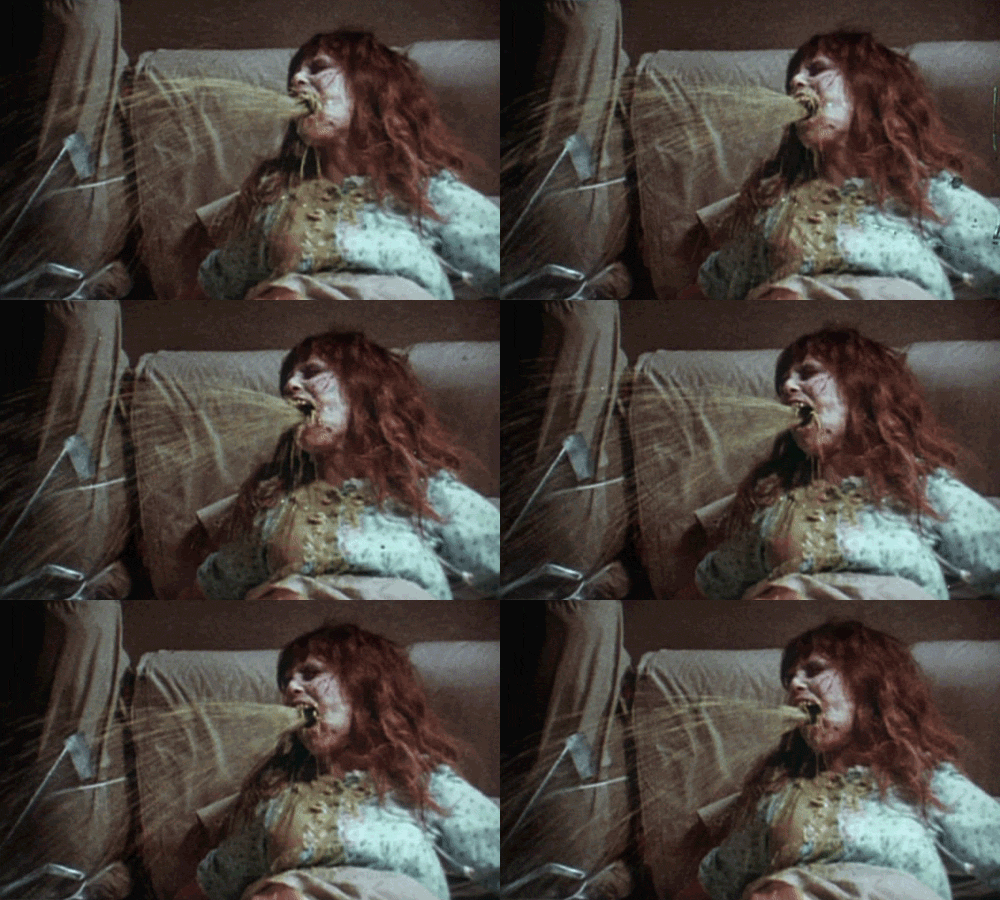
In Barbara Creed’s, “Horror and the Monstrous Feminine: An Imaginary Abjection,” Creed states, “In The Exorcist, the world of the symbolic, represented by the priest-as-father, and the world of the pre-symbolic, represented by a pubescent girl aligned with the devil, clashed head on in scenes where the foulness of woman was signified by her putrid, filthy body covered in blood, urine, excrement and bile.” This is an important quote to analyze when watching The Exorcist because when it comes to abjection, The Devil forces abjection through biology and religion. A dead body is considered to be the ultimate abject. A living human ejects all of the bodily wastes that are harmful to the their body. However, when The Devil possesses the body of a young girl, The Devil expels the girl from her body, forcing her to release puke, bile, and excrement much like a dead body, but as well as the young girl’s soul for she was no longer there. The Devil successfully expels the young girl’s soul, for The Devil was in full possession of her body. The worst type of abject because a corpse is a body with no soul, striking fear into the most devout people (Figure 2).
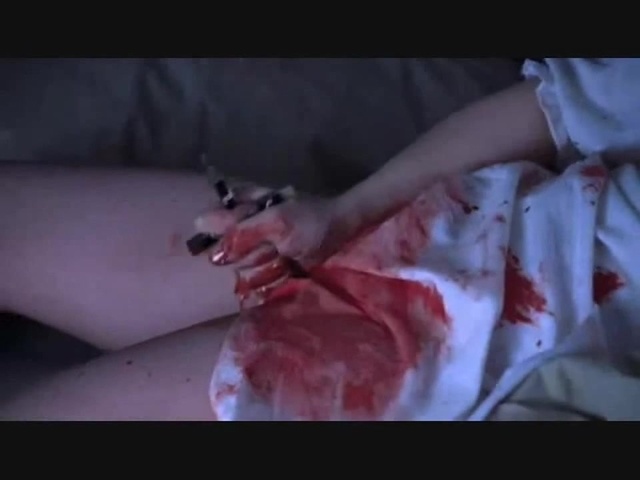
Additionally, Creed states, “Possession becomes the excuse for legitimizing a display of aberrant feminine behavior which is depicted as depraved, monstrous, abject – and perversely appealing.” The Exorcist does a good job displaying this quote once The Devil begins to have the young girl pleasure herself with a crucifix. An abomination of a scene that was entirely depraved and monstrous, but perversely appealing caused riots amongst people around the world who watched. The scene reinforced the idea that societies at one point saw women as monstrous and disgusting, but still alluring based off an idea of a sexual matter tied with something so pure (Figure 3).
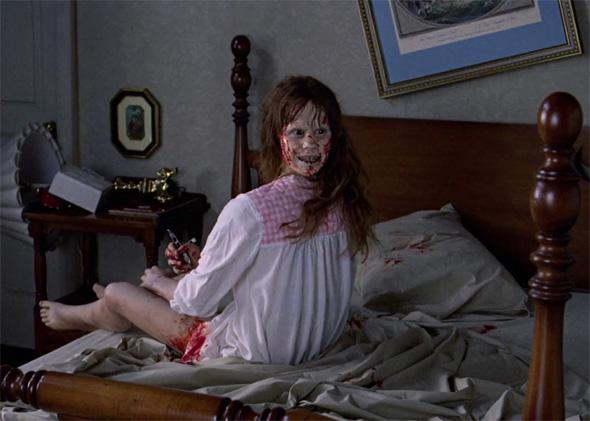
Finally, Creed states, “One of the most interesting aspects of The Exorcist is the way in which it uses woman’s body to represent this conflict. The rebellion is presented as monstrous yet immensely appealing; in this way the film presents the ambiguous aspect of abjection. Abjection ‘fascinates desire’ but must in the interests of self-preservation be repelled. Reagan’s behavior is outrageous yet compelling.” Despite the fact when The Exorcist was released in theater’s world wide, causing people to walk out or feint, many people as well found how enthralling the chaos was ensued within the female body. Creed and The Exorcist show how the abject is placed on the side of the feminine and how it exists in opposition to the paternal symbolic, which is governed by rules and laws. The abject represents that which disturbs identity, system, and order (Figure 4).
All together, The Exorcist can be analyzed using Barbara Creed’s, “Horror and the Monstrous Feminine: An Imaginary Abjection” by showing how societies thought (sometimes still do) think about the female body, and how females are considered monstrous. The Exorcist presents to viewers the mystery of faith and science in one of it’s most raw form through the usage of men and women, good and evil.
 Film and Culture 20/SP*CMS*353*A (Conor Diggs)