On the surface, Bryan Forbes’ 1975 The Stepford Wives, can be viewed as a modern take of a frightening reality for women around the world who are forced to live in a time period similar to the early 30s and 50s compared to that of the late 20th century. A female photography aspirant acts as a social outcast amongst her female peers in the town of Stepford who find their only sole happiness in being married and a housewife. The issues that the protagonist face in this movie can best be understood by understanding “The Feminine Mystique,” by Betty Friedan. Friedan states that women alone could only find fulfillment through housework, marriage, sexual passivity, and child rearing alone. Society at the time held that “truly feminine” women had no desire for education or careers and instead women found complete fulfillment in their domestic sphere at home. The Stepford Wives depicts an excellent, but ominous story of what a society would look like if women never caught on to “the problem that has no name,” or the consequence of what would happen to an ambitious female who tried acting out of the normal.
From the viewers standpoint, it looks as if Joanna Eberhart is trying to repress her ambition of being a career photographer by following the whims of her husband, Walter. The couple, along with their children, move from New York City, to the town of Stepford where Joanna is perturbed that most of the women in the town are overly obsessed with keeping their houses clean and ensuring their husbands are always satisfied. Joanna states these observations to her husband Walter, but Walter causally brushes Joanna off or makes lousy excuses to why the women of Stepford act abnormally. Luckily for Joanna, she meets another housewife named Bobbie who also notices the bizarre behavior of the other housewives that the men are supposedly “blind” to. Joanna and Bobbie share the same ideas and comes up with a plan to create a women’s club that mimics the mysterious Men’s Society in Stepford. However, as Joanna and Bobby each go to ask different women if they’re interested, they are always given the same strange answers of how they can appease their husbands. Joanna and Bobby look on in concern towards one of the housewives who obsessively just wants to keep the house clean (Figure 1).

Looking back to “The Feminine Mystique,” Friedan spends a lot of the time criticizing Sigmund Freud because he saw women as childlike and that their sole destiny was to be housewives and child bearers. Friedan also states that media was one of the contributing facts and that men were the driving force behind editorial publications of women’s magazines (Friedan). This helps with analyzing The Stepford Wives because it reveals that one of the central themes of this movie is that Men dominate women, and there is nothing women can do about it. In the town of Stepford, men run everything with the illusion too new comers that they care about their wives, but truly only see their wives as objects bent to their will. In “The Feminine Mystique” there is a section where Friedan states that men are not able to understand the troubles their wives were having and would often brush them to the side (Friedan). The men of Stepford however, found a way to stop their wives from having these issues by turning them into animatronics that were entirely subordinate. If one of the men’s wives began to act suspicious, with haste, the Men’s Society would begin to investigate what they’re dealing with.
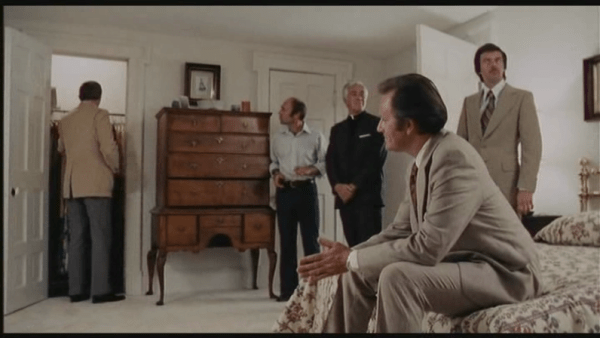
The film comes to a horrifying climax once Joanna discovers what the men of Stepford have been doing. The viewer’s knew Joanna’s chances of delaying the inevitable was coming fast once she was standing face to face with her robotic clone. After a quick fade to black, the screen shifts setting and the viewers see all of the Stepford Wives shopping in the grocery store. Joanna is seen grocery shopping as well and it’s obvious she looks and acts nothing like the viewer’s were familiar to. No matter what Joanna tried to do, she couldn’t stop what the men were ultimately going to do to her. Bryan Forbes’ gruesome tale of The Stepford Wives represents and reiterates to what some females lifestyles are currently in cultures around the world and what could’ve been if women never identified “the problem with no name.”
 Film and Culture 20/SP*CMS*353*A (Conor Diggs)